Content Creators: Stop Building Content First, Build the Business That Pays You

Content Creators: Stop Building Content First, Build the Business That Pays You
Let me get straight to the point.
If you're a content creator building content before building a business, you're probably going to stay broke.
I know that sounds harsh. But I'd rather tell you the truth than watch you spend the next three years posting videos, chasing trends, buying gear, hiring editors, and wondering why the money still doesn't make sense.
Here's the problem.
Most creators aren't lazy. Most aren't untalented. Most aren't afraid of hard work. The real problem is that they started creating content before they ever built a business. And that order matters a lot.
The Creator Economy Is Growing, But That Doesn't Mean You Are
You've probably heard about the creator economy being this massive opportunity. It is.
Goldman Sachs estimated the creator economy could grow from about $250 billion to $480 billion by 2027. That's huge. The same report found that there are about 50 million global creators, with brand deals accounting for roughly 70% of creator revenue.
But here's the part nobody wants to talk about.
Only about 4% of global creators are professionals, meaning they earn more than $100,000 per year. So yes, the creator economy is growing. But that doesn't automatically mean your creator business is growing. It definitely doesn't mean you're part of that 4%.
Most Creators Don't Have a Content Problem, They Have a Business Problem
Everywhere you look, someone is telling creators how to get more views. Get more followers. Post more reels. Use this hook. Try this trend. Fix your lighting. Improve your thumbnails. Beat the algorithm.
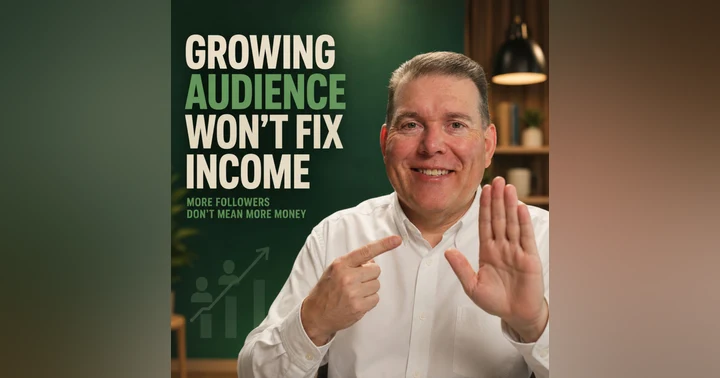
Some of that matters. But views alone don't pay your mortgage. Followers alone don't pay your taxes. Going viral doesn't automatically mean you have a profitable business.
According to Linktree's Creator Report, 59% of beginner creators had not monetized yet. Another 35% had monetized but earned below a livable income. Even full-time creators struggled: 46% made less than $1,000 in annual revenue, while only 12% made more than $50,000.
Let that sink in.
You can be busy. You can be visible. You can be consistent. You can even call yourself full-time. And still not have a business that pays you. That's not a content problem. That's a structural problem.
Your Content Is Not the Business
Here's where creators get confused. They think content is the business. It's not.
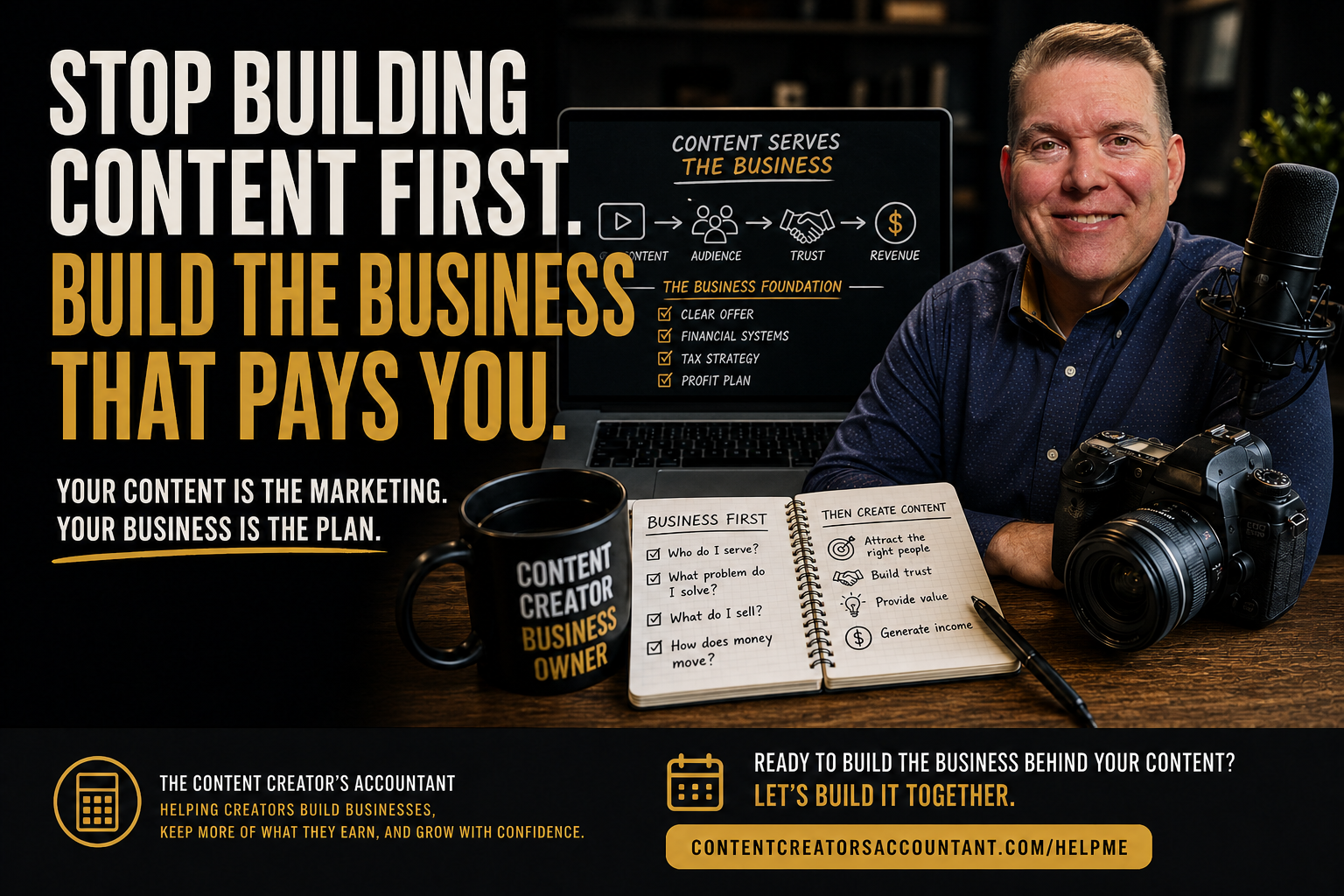
Your content is the marketing. Your business is what the content points to.
Your content should lead people somewhere. Build trust. Attract the right audience. Answer the questions your future customers are already asking. But if there's no business model behind it, your content is just activity. And activity is not profit.
You can post every day and still not know who you serve, what problem you solve, what you sell, how you get paid, or what your margins are. You can have no idea how much to set aside for taxes or whether your "big month" was actually profitable.
If you don't know those things, you're not running a content creator business. You're running on hope. And hope is not a strategy.
The Broke Creator Cycle
I see this cycle all the time.
A creator starts posting. They get traction. Money comes in from AdSense, Stripe, PayPal, affiliate commissions, a brand deal, a digital product, or a sponsor. They get excited.
They upgraded the camera. Buy more software. Hire help too early. Forget about taxes. Mix personal and business money. Live off whatever hit the account last week.
Then April comes. Or the slow month. Or the sponsor doesn't renew. Or the algorithm changes. And suddenly they're asking, "Where did all the money go?"
You don't break that cycle by making more content. You break it by building a better business.
Build the Business First
Before you post another video, publish another episode, or launch another series, you need to answer three questions.
Who do I serve?
Not everybody. Everybody is not a target market. Are you helping busy moms? Small business owners? Coaches? Gamers? Podcasters? Homeschool families? New investors? Fitness beginners? Faith-based entrepreneurs? You need to know exactly who you're talking to.
What problem do I solve?
People don't pay you because you create content. They pay you because you help them solve a problem, reach a goal, avoid pain, save time, make money, feel confident, or get clarity.
What do I sell?
This is the one creators avoid. But you have to know. Are you selling consulting? Coaching? Courses? Templates? Memberships? Digital products? Physical products? Speaking? Sponsorship packages? Affiliate recommendations? Community access? Pick a lane. You can adjust later, but you need a starting point. Because if you don't know what you sell, your audience won't know what to buy.
Your Revenue Model Comes Before Your Content Calendar
A content calendar is helpful. But a revenue model is more important.
Too many creators ask, "What should I post this week?" That's the wrong first question. The better question is: What business am I building, and what content supports that business?
If your business is coaching, your content should build trust and show people what problem you solve. If it's digital products, your content should educate and lead them toward the product. If it's sponsorships, your content should serve a defined audience that sponsors want to reach. If it's affiliate income, your content should help people make confident buying decisions. If it's services, your content should demonstrate that you understand the customer's pain better than anyone else.
That's when content starts doing its job. It stops being random. It becomes a business asset.
You Need a Real Financial Structure
Now let me put on my accountant hat.
If money is coming in from content, you're already in business. The question is whether you're treating it like one.
The IRS says self-employed individuals have to file annual income tax returns and pay estimated taxes quarterly. They also pay both income tax and self-employment tax. The self-employment tax rate is 15.3%, which breaks down to 12.4% for Social Security and 2.9% for Medicare. That's before federal, state, or local taxes.
That's why "I'll figure it out later" is dangerous. Because later usually costs more.
A real content creator business needs:
- A separate business bank account
- A system for tracking income and expenses
- A tax savings plan
- A clear owner pay system
- A business structure review
- A way to measure profit, not just revenue
- A plan for slow months
- A plan for growth
This is the stuff that keeps creators from going broke. And honestly, it's not boring once you understand what it does. It gives you control.
Revenue Is Not Profit
This is one of the biggest lessons creators need to learn.
Revenue is what came in. Profit is what is left after the business covers its costs.
A $10,000 month sounds great. But if you spent $3,000 on contractors, $1,200 on software and subscriptions, $1,500 on gear, forgot to set aside money for taxes, and used the rest for personal spending, you didn't have a $10,000 month. You had a cash movement. That's different.
Creators get in trouble here. They look at the bank balance and think they're doing fine. But the bank balance doesn't tell you what belongs to the IRS. It doesn't tell you what belongs to the business. It doesn't tell you what you can safely pay yourself.
You need numbers. Not vibes.
Stop Letting the Algorithm Be Your Business Plan
The algorithm can help you grow. But it cannot be your business plan.
You don't control the algorithm. You don't control platform changes. You don't control whether a brand renews. You don't control whether a video goes viral.
But you can control your business model. You can control your offer. You can control your pricing. You can control your bookkeeping. You can control your tax plan. You can control your systems. You can control how money moves when it comes in.
That's where peace starts. Not with more views. With more structure.
Content Should Serve the Business
Once the business is clear, your content gets easier. Now every piece has a purpose. It should do at least one of these things:
- Attract the right person
- Build trust
- Educate your audience
- Answer a buying question
- Show the cost of staying stuck
- Invite the next step
- Move someone closer to becoming a customer
You don't need content just to fill space. You need content that supports the business you're building. When your content serves your business, you stop chasing attention and start building income.
The Shift You Need to Make
Stop asking: "What should I post today?"
Start asking: "What business am I building?"
Stop asking: "How do I get more followers?"
Start asking: "How do I serve the right people and give them a clear way to work with me?"
Stop asking: "How do I go viral?"
Start asking: "How do I build something that still works when a post doesn't perform?"
That's the shift. That's how you go from feeling broke to having a plan.
This Is Where I Come In
You might be thinking, "Ralph, I get it. But I don't even know where to start."
That's exactly why I do what I do.
I'm Ralph Estep Jr., The Content Creator's Accountant. I help content creators, coaches, podcasters, YouTubers, influencers, and online entrepreneurs stop guessing with their money and start building real businesses around their content.
Not hype. Not shame. Not complicated accounting talk that puts you to sleep.
Just a practical structure. The kind that helps you understand your numbers, plan for taxes, separate your money, build the right foundation, and finally treat your creativity like the business it already is.
Because here's the truth. You don't need to stay stuck in the broke creator cycle. You don't need to keep wondering where the money went. You don't need to keep hoping April works out. And you don't need to build this alone.
Ready to Build the Business Behind Your Content?
If you're tired of creating content but still feeling broke, it's time to fix the foundation.
Let's look at your structure. Let's look at your money. Let's look at your taxes. Let's look at your offers. Let's look at what your content is meant to support.
Because your creativity should build more than content. It should build income. It should build stability. It should build peace. It should build a real business.
Go to contentcreatorsaccountant.com/helpme and book a call with me.
Let's stop letting your content control your income. Let's build a business that helps your content finally make money the right way.
Final Word
You are not just a content creator. You are a business owner.
And the sooner you start acting like one, the sooner your content starts working for you instead of wearing you out.
So stop building content first. Build the business. Then let the content serve it.
That's how you break the cycle. That's how you stop feeling broke. That's how you build something that lasts.
FAQ Section
Do content creators need an accountant?
Yes. Once a creator earns income from sponsorships, AdSense, affiliate marketing, products, coaching, services, or paid subscriptions, they're operating a business. A content creator accountant can help with bookkeeping, taxes, business structure, deductions, estimated tax payments, and cash flow planning.
Should content creators form an LLC?
An LLC may make sense for some creators, but it depends on their income, risk, state, business model, and long-term goals. The key is not just forming an LLC. The key is building the right business structure around how the creator actually earns money.
Why do content creators feel broke even when they make money?
Many creators feel broke because they mix personal and business money, fail to set aside money for taxes, spend during income spikes, and don't track true profit. The problem usually isn't just income. It's a lack of structure.
How can content creators make consistent money?
Content creators can build a consistent income by establishing a clear business model, defining what they sell, building multiple revenue streams, tracking profits, saving for taxes, and using content to support offers rather than relying solely on views or platform payouts.
What is the biggest money mistake content creators make?
The biggest mistake is treating content like the business rather than like marketing. Content should point to a clear business model. Without that, creators can get attention without building income.

President
Ralph V. Estep, Jr. is a Delaware-based licensed accountant, author, rancher, and media host with more than 30 years of experience in finance, taxation, and small-business leadership. As the founder of Saggio Accounting+PLUS and the creator of the Ask Ralph Media network, Ralph helps entrepreneurs, creators, and everyday families replace money confusion with clarity, confidence, and practical next steps—without shame and without hype.
Ralph’s work blends deep professional expertise with a coach’s mindset and a communicator’s heart. He has held leadership roles across public accounting, financial institutions, law firms, and technology organizations, bringing a rare combination of traditional accounting rigor and modern systems thinking to the people he serves. A graduate of the University of Delaware and Wilmington University (MBA), Ralph is known for turning complex money topics into simple, repeatable frameworks that help people make wiser decisions and build lasting financial stability.
Through Ask Ralph Media, Ralph hosts multiple shows designed to meet people where they are and guide them forward. He is the host of Financially Confident Christian, a daily, faith-based show offering warm, pastoral encouragement for listeners who want peace and practical wisdom with their finances.
He also hosts Truth Unveiled with Ralph, a weekly program that contrasts cultural pressure with biblical truth and invites listeners into deeper spiritual and practical alignment. For small business owners, Ralph leads Grit and Growth Business, spotlighting real sto… Read More
Your Downloads Are Up. Your Revenue Isn't. Here's Why.