Turn Your Podcast Into Real Revenue: The Monetization Formula That Works
Turn Your Podcast Into Real Revenue: The Monetization Formula That Works
Here's what I see all the time: A creator with 5,000 monthly downloads makes zero dollars. Another with 500 downloads built a six-figure coaching practice. Same platform, completely different outcomes because one understood how to turn their podcast into real revenue using a specific monetization formula, and the other didn't.
If you're pouring hours into a show that isn't paying you, we need to talk about podcast monetization. Not in some vague "build your audience and monetize later" way. Right now. Specifically.
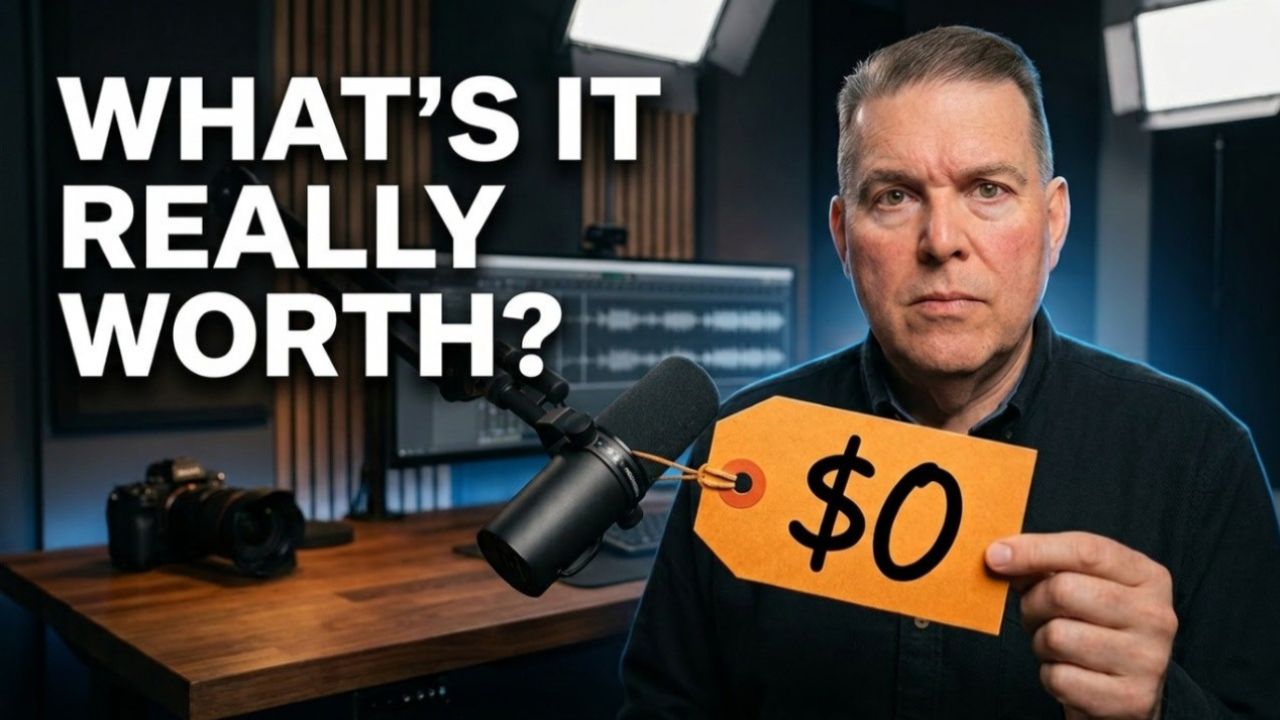
What separates a podcast from a podcast business?
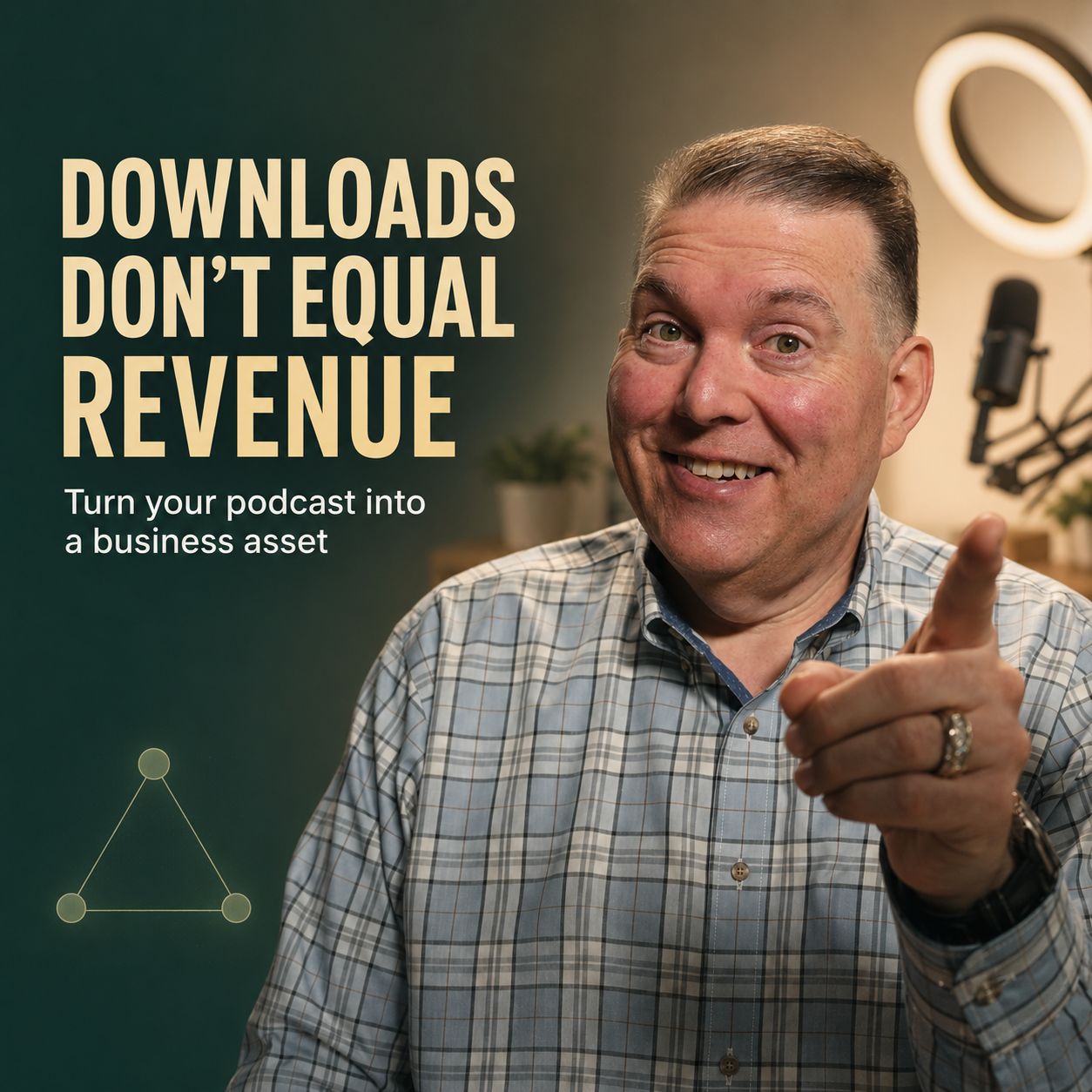
Most creators conflate downloads with dollars. That's the trap. You can have 50,000 monthly downloads and zero income. You can have 500 monthly downloads and $8,000 in monthly revenue. I've seen both.
The difference is simple: one is content. The other is an asset.
Content fills time slots and feed readers. An asset generates cash. Your podcast should do the second. If it's not, you're not running a business yet. You're running a hobby that happens to have a budget.
That doesn't mean you need a massive audience. What you need is clarity about what your podcast is actually for. Is it a lead generation tool for your coaching? A sales channel for your course? A brand-building platform that supports your agency? Until you can answer that in one sentence, your podcast stays in hobby mode, and monetization stays theoretical.
The creator revenue formula that actually works
I teach creators a framework I call the Revenue Triangle. Think of it like a stool with three legs. Remove one, and everything collapses.
The three legs are audience, problem, and offer.
Your audience isn't a vanity metric. It's not your download count. It's the people who would actually buy something from you if you built the right solution. That means you need to know who they are specifically. Not "solopreneurs" but "solopreneurs in their first year struggling with quarterly tax payments." The more specific you are, the clearer your next move becomes.
The problem is the pain point you solve. Most creators skip this step. They assume their listeners have the same problems they do. That's where everything breaks down. A podcaster reaching CPAs has a completely different monetization path than a podcaster reaching first-time business owners. Same format, different problems, different offers.
The offer is what you're actually selling. It could be a course. A membership. A coaching package. A product. Whatever it is, it has to solve the specific problem your specific audience faces. If your audience is anxious about taxes and you're selling a $2,000 accounting software course, you have a match. If you're selling meditation workshops to the same audience, you don't.
When all three are aligned, podcast monetization stops being a mystery and starts being math. Audience x Problem x Offer = Revenue. Miss one component, and your revenue stays flat.
A real example of how this works
I worked with a podcaster named Sarah who was stuck at 800 monthly downloads and zero income. Her show was good. Clean audio, regular cadence, decent engagement in the comments. But she had no offer, and her audience was undefined.
We spent two weeks getting specific. Who actually listened? Turns out, first-year nurses. Why did they listen? They were terrified about money, making $52,000 and drowning in student loans. What did they need? Specific, nurse-relevant financial strategies they could implement in their first year.
Sarah already knew this world. She'd been a nurse. So she built a simple product: a six-week group coaching program called "Your First Year Nurse Money Blueprint." Pricing? $197 per person. Capacity? Eight people per cohort, starting with just one.
By month two, she had sold 6 spots from her existing audience. That's $1,182 in revenue. By month six, she was running the program every month at full capacity. That's $1,576 per month in recurring revenue just from her podcast audience. From 800 downloads. From a product that took two weeks to design because she understood her problem clearly.
Sarah didn't suddenly go viral. She didn't grow to 10,000 listeners. She just got specific about who she was serving and what they actually needed.
How to start your own podcast monetization strategy
First, audit your current situation. Define your audience in one paragraph. Not "entrepreneurs" but the actual person listening. Where are they in their journey? What keeps them up at night?
Second, identify the specific problem you solve. Not the vague problem, but the real financial or time-based cost of that problem. If it costs your listener $5,000 per year in wasted time or lost revenue, that's the problem you're solving. That number matters because it shapes how much you can charge to solve it.
Third, design a simple offer. Not ten products. One. Something you can deliver without burning out. Something that actually solves the problem you identified. Start with a test. Sarah started with one cohort. Prove it works before you scale it.
Your podcast doesn't need to have a massive audience to be a real asset. It needs to be intentional. It needs to know who it's serving, what it's solving, and what it's selling.
That's how you turn downloads into dollars.

President
Ralph V. Estep, Jr. is a Delaware-based licensed accountant, author, rancher, and media host with more than 30 years of experience in finance, taxation, and small-business leadership. As the founder of Saggio Accounting+PLUS and the creator of the Ask Ralph Media network, Ralph helps entrepreneurs, creators, and everyday families replace money confusion with clarity, confidence, and practical next steps—without shame and without hype.
Ralph’s work blends deep professional expertise with a coach’s mindset and a communicator’s heart. He has held leadership roles across public accounting, financial institutions, law firms, and technology organizations, bringing a rare combination of traditional accounting rigor and modern systems thinking to the people he serves. A graduate of the University of Delaware and Wilmington University (MBA), Ralph is known for turning complex money topics into simple, repeatable frameworks that help people make wiser decisions and build lasting financial stability.
Through Ask Ralph Media, Ralph hosts multiple shows designed to meet people where they are and guide them forward. He is the host of Financially Confident Christian, a daily, faith-based show offering warm, pastoral encouragement for listeners who want peace and practical wisdom with their finances.
He also hosts Truth Unveiled with Ralph, a weekly program that contrasts cultural pressure with biblical truth and invites listeners into deeper spiritual and practical alignment. For small business owners, Ralph leads Grit and Growth Business, spotlighting real sto… Read More

How Much Does a Podcast Actually Pay? The Real Numbers Behind Ad Revenue