How a Podcast With 800 Listeners Earns More Than One With 50,000
How a Podcast With 800 Listeners Earns More Than One With 50,000
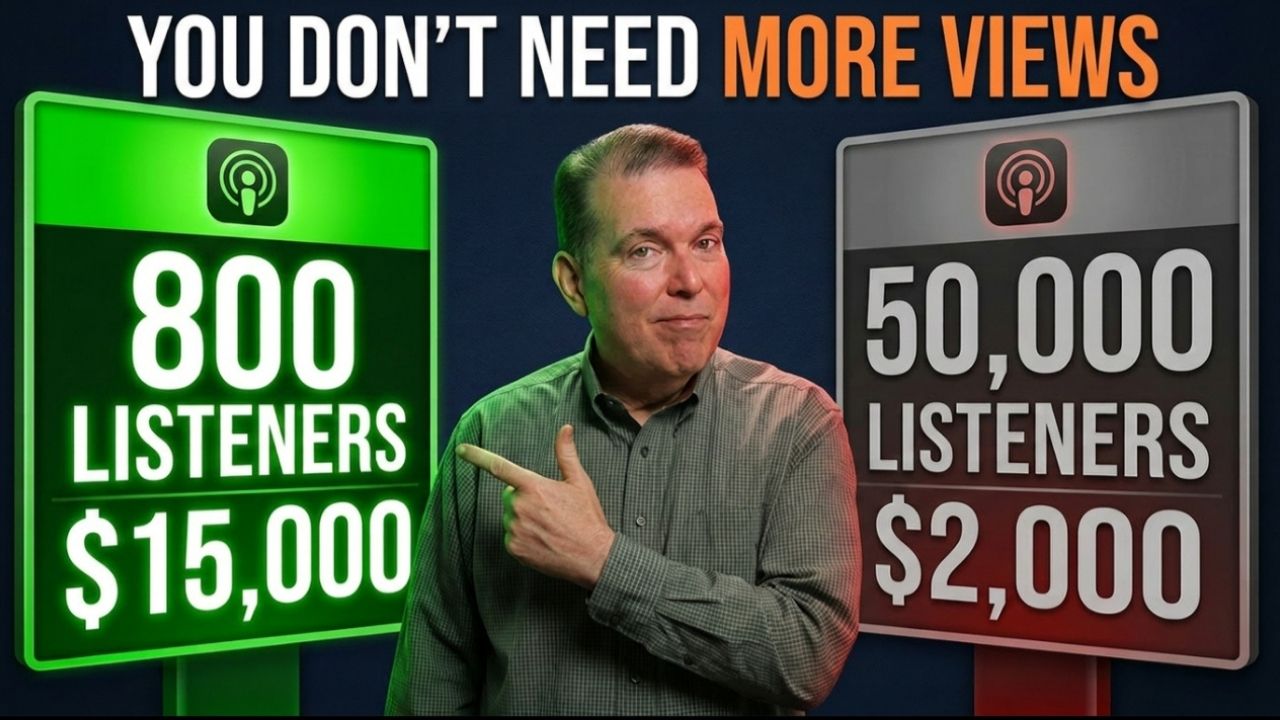
A podcaster I know has 800 listeners. Last month, she made $15,000. The show sitting next to hers in the charts has 50,000 listeners and made $2,000. That's 62 times the audience earning one-seventh the income. And before you assume she found some loophole or got lucky, she didn't. She just figured out something most podcasters never do: downloads and income are two completely different games, and you can win the second one without winning the first.
Why more downloads don't mean more income
Most creators spend months chasing downloads. They tweak their SEO, guest on more shows, post more consistently. The income still doesn't move.
That's because growth isn't the problem. The business model is.
And here's what makes that good news: you can fix your business model today, with the audience you already have, without gaining a single new subscriber.
Audience economics: what each listener is actually worth
The question most podcasters ask is "how many listeners do I have?" The question they should ask is "What is each listener worth to my business?"
Here's how the math actually works.
A general business show with 1,000 listeners running ads and sponsorships might earn a few cents per listener per month. A niche show serving 200 small business owners who need accounting help could be worth thousands of dollars per listener through coaching, consulting, or services.
Same effort. Very different income. That gap is audience economics.
Let's look at two real examples.
Podcast A: 50,000 downloads per episode. General business advice. Revenue model: sponsorships and ads. Monthly income: $2,000.
Podcast B: 800 downloads per episode. Topic: helping independent consultants land high-ticket clients. Revenue model: coaching, consulting, and a digital course. Monthly income: $15,000.
Podcast B has 1.6% of the audience and earns 7.5 times the income. That's not luck. That's a business model.
Why niching down makes you more money, not less
"Niche down" is advice most creators hear and immediately resist. The fear is that a smaller topic means a smaller audience and fewer opportunities.
Here's what actually happens when you niche down correctly. You become more relevant to the right person. More relevant means more valuable. More valuable means you can charge more.
Broad content gets attention. Specific content generates income. Those aren't the same thing.
The service-driven show
There's a category of podcast most creators don't know exists. I call it the service-driven show.
It's not built to attract advertisers. It's built to attract clients.
Every episode does three things: it demonstrates your expertise on a real problem your audience has, it builds trust with the people who have that problem, and it positions you as the person who can solve it. When you do all three consistently, your show becomes a lead generation engine. Not because you're selling every episode, but because you're solving something every episode. People pay for solutions. They pay well for them.
The four-step framework for podcast monetization
If you want to turn your podcast into a business, here's the framework I walk through with every client in my content monetization audit.
Step 1: Name one person. Not a demographic. One real, specific person. Who is your show actually for? Get specific enough that you can describe them in a single sentence.
Step 2: Find the dollar problem. What is costing that person money right now? Or, what could they earn more of if this problem were solved? Money-adjacent problems like time, revenue, tax exposure, or cash flow are almost always the easiest to monetize.
Step 3: Build one offer. What service or product helps your ideal listener solve that problem? Coaching, consulting, a course, a done-for-you service. It doesn't have to be complicated. It has to be real.
Step 4: Align every episode. Every episode you record from this point forward should reinforce the problem, demonstrate your ability to solve it, and point toward your offer. That's the whole model.
The question to ask before you record another episode
Before your next recording session, write down the name of one person your show is for. Then ask yourself: what would I sell them tomorrow?
If you can answer that clearly, you don't have a small podcast. You have a business waiting to launch.
If you want help answering that question, that's exactly what I do in my content monetization audit. It's a focused session where we look at your show, your audience, and your offer together and map where the income opportunity actually is.
Apply at contentcreatorsaccountant.com/audit.

President
Ralph V. Estep, Jr. is a Delaware-based licensed accountant, author, rancher, and media host with more than 30 years of experience in finance, taxation, and small-business leadership. As the founder of Saggio Accounting+PLUS and the creator of the Ask Ralph Media network, Ralph helps entrepreneurs, creators, and everyday families replace money confusion with clarity, confidence, and practical next steps—without shame and without hype.
Ralph’s work blends deep professional expertise with a coach’s mindset and a communicator’s heart. He has held leadership roles across public accounting, financial institutions, law firms, and technology organizations, bringing a rare combination of traditional accounting rigor and modern systems thinking to the people he serves. A graduate of the University of Delaware and Wilmington University (MBA), Ralph is known for turning complex money topics into simple, repeatable frameworks that help people make wiser decisions and build lasting financial stability.
Through Ask Ralph Media, Ralph hosts multiple shows designed to meet people where they are and guide them forward. He is the host of Financially Confident Christian, a daily, faith-based show offering warm, pastoral encouragement for listeners who want peace and practical wisdom with their finances.
He also hosts Truth Unveiled with Ralph, a weekly program that contrasts cultural pressure with biblical truth and invites listeners into deeper spiritual and practical alignment. For small business owners, Ralph leads Grit and Growth Business, spotlighting real sto… Read More
The Real Reason Your Podcast Isn't Making You Money