Why the Podcast Measurement Debate Matters to Creators' Revenue
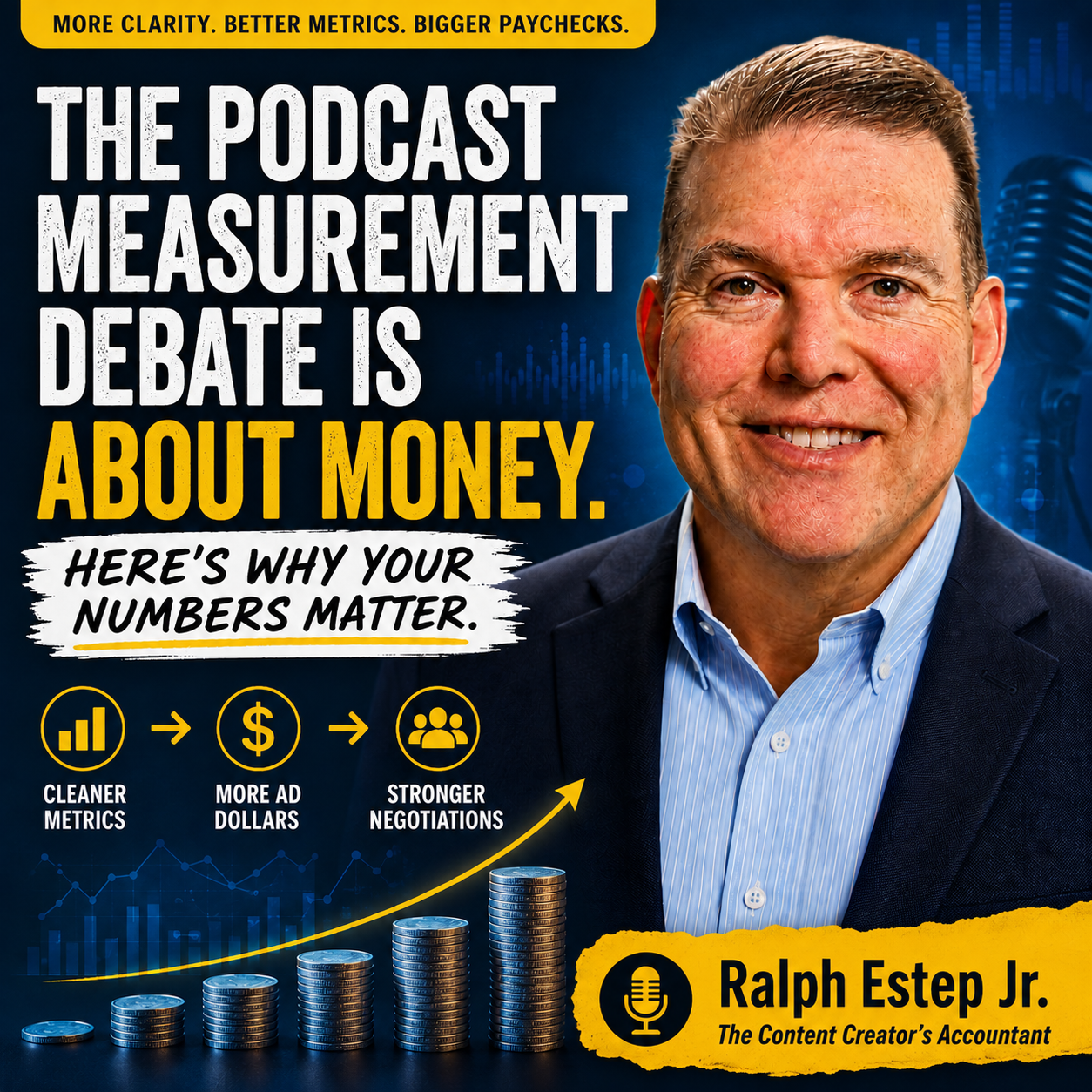
The Podcast Measurement Debate Is About Money. Here's Why Your Numbers Matter.
Why the Podcast Measurement Debate Matters to Creators' Revenue
The podcast industry just formed a task force to answer: "What is a podcast?"
On the surface, it's a creative question. Does it need RSS? Does video count? Does it have to be audio-first?
But I'll be honest. This isn't about language. It's about money.
The Alliance for Measurement in Podcasting (AMP) is trying to standardize how the industry measures impressions, performance, and podcast value across platforms. Their own site says "a billion dollars of demand is sitting on the sidelines" because advertisers don't trust the current metrics.
Translation: the money is waiting, but the measurement rules need to catch up first.
Why This Matters to You
Here's the thing. I used to see podcasting as simple: record, upload, get sponsors based on downloads.
But it's not anymore.
I might publish the same show across Apple Podcasts, YouTube, TikTok clips, Spotify, a newsletter, and live events. Each platform measures success differently. Spotify counts streams one way, YouTube counts views another. An advertiser looking at these numbers sees confusion, not confidence.
When advertisers don't trust numbers, they don't spend. When they do, they spend more.
So when the industry standardizes measurement, it changes what creators can charge. A cleaner definition of "podcast" means cleaner CPM rates. Better cross-platform metrics mean bigger sponsorship deals. Agencies stop hedging and start buying.
The data backs this. Podcast advertising hit $2.9 billion in 2025, up 17.6% year over year. Creator advertising spend reached $37 billion. The money is already moving. The platforms are just getting organized about it.
What I'd Actually Do Right Now
If I were running a podcast right now, I wouldn't wait for the industry to finish its definition. I'd get my books in order.
The creators who benefit from clearer measurement are the ones who can already prove their numbers. That means:
Tracking sponsorship revenue separately from platform payouts. Knowing which channels actually turn to profit, not just views. Understanding your production costs per episode. Recording contract terms where they live — not in an email thread. Organizing expense receipts so tax season isn't a panic.
The more professional the industry gets, the more professional your back office has to be.
A creator with clean financials, clear audience data, and organized contracts is in a stronger position to negotiate when standardized measurement arrives. A creator who's still treating content like side income is scrambling.
The Risk You Can't Ignore
There's a catch. The industry is defining podcasting around what's easiest to measure.
Impressions? Easy. Trust? Not a number. Community? Can't spreadsheet it. The fact that your audience actually cares what you say? That's the hardest thing to quantify.
But money follows measurement. So your job is to understand the numbers without letting them become your entire story.
You are not just impressions. Your authority, trust, and a relationship with people who listen.
Just make sure you can also prove it on a spreadsheet.
The Accounting Angle
For creators, the lesson is clear: the creator economy is maturing.
Mature industries have better financial systems. If you're serious about content, treat it like a real business. Separate your business and personal finances. Track revenue by stream. Know your margins. Review contracts carefully. Use your data to make better decisions.
When an industry forms a task force to redefine itself, follow the money.
Podcasting is becoming more measurable and more commercial. That can create real opportunity. But only if you understand your numbers.

President
Ralph V. Estep, Jr. is a Delaware-based licensed accountant, author, rancher, and media host with more than 30 years of experience in finance, taxation, and small-business leadership. As the founder of Saggio Accounting+PLUS and the creator of the Ask Ralph Media network, Ralph helps entrepreneurs, creators, and everyday families replace money confusion with clarity, confidence, and practical next steps—without shame and without hype.
Ralph’s work blends deep professional expertise with a coach’s mindset and a communicator’s heart. He has held leadership roles across public accounting, financial institutions, law firms, and technology organizations, bringing a rare combination of traditional accounting rigor and modern systems thinking to the people he serves. A graduate of the University of Delaware and Wilmington University (MBA), Ralph is known for turning complex money topics into simple, repeatable frameworks that help people make wiser decisions and build lasting financial stability.
Through Ask Ralph Media, Ralph hosts multiple shows designed to meet people where they are and guide them forward. He is the host of Financially Confident Christian, a daily, faith-based show offering warm, pastoral encouragement for listeners who want peace and practical wisdom with their finances.
He also hosts Truth Unveiled with Ralph, a weekly program that contrasts cultural pressure with biblical truth and invites listeners into deeper spiritual and practical alignment. For small business owners, Ralph leads Grit and Growth Business, spotlighting real sto… Read More
Business Profit vs. Cash Flow: Why You're Profitable but Have No Money in the Bank