The Sponsor Payment Trap: Why Cash Flow Matters More Than the Contract
The Sponsor Payment Trap: Why Cash Flow Matters More Than the Contract
You land a brand deal. Five grand. Ten grand. Maybe twenty. Your stomach does a flip. "I made it," you think. "Finally."
Then you wait. And wait. Two weeks. A month. The money still isn't in your account.
Meanwhile, your team's paycheck is due Tuesday. Your software subscriptions renew tomorrow. The gear you already ordered arrives next week. Suddenly, that "locked in" deal feels like a promise written in disappearing ink.
This is the sponsor payment trap, and I've watched it derail more creator businesses than almost anything else.
I'm Ralph Estep Jr., the Content Creator’s Accountant, and I work with creators every day who are caught in this exact loop. The fix isn't complicated, but it requires discipline.
Why Booked Doesn't Mean Paid
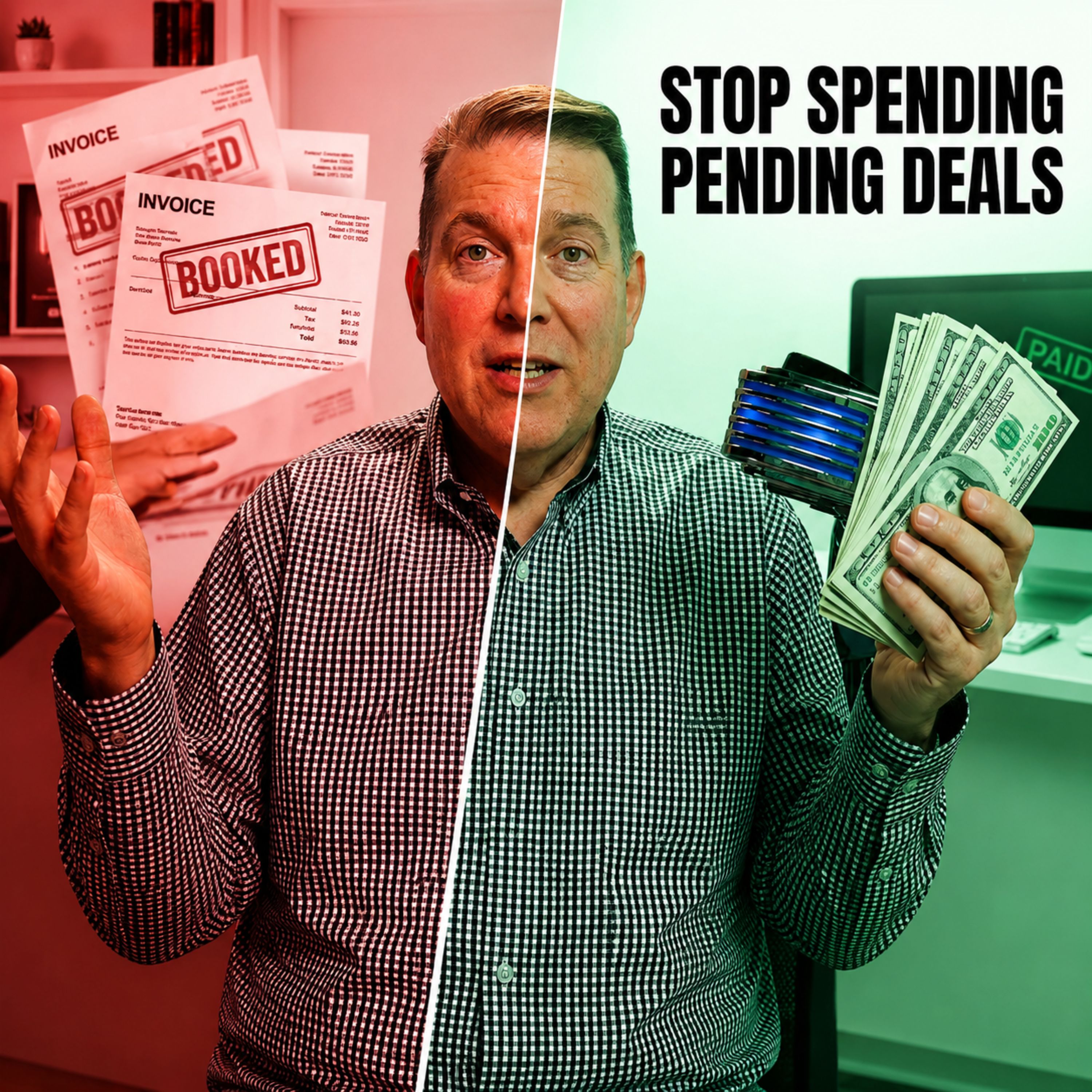
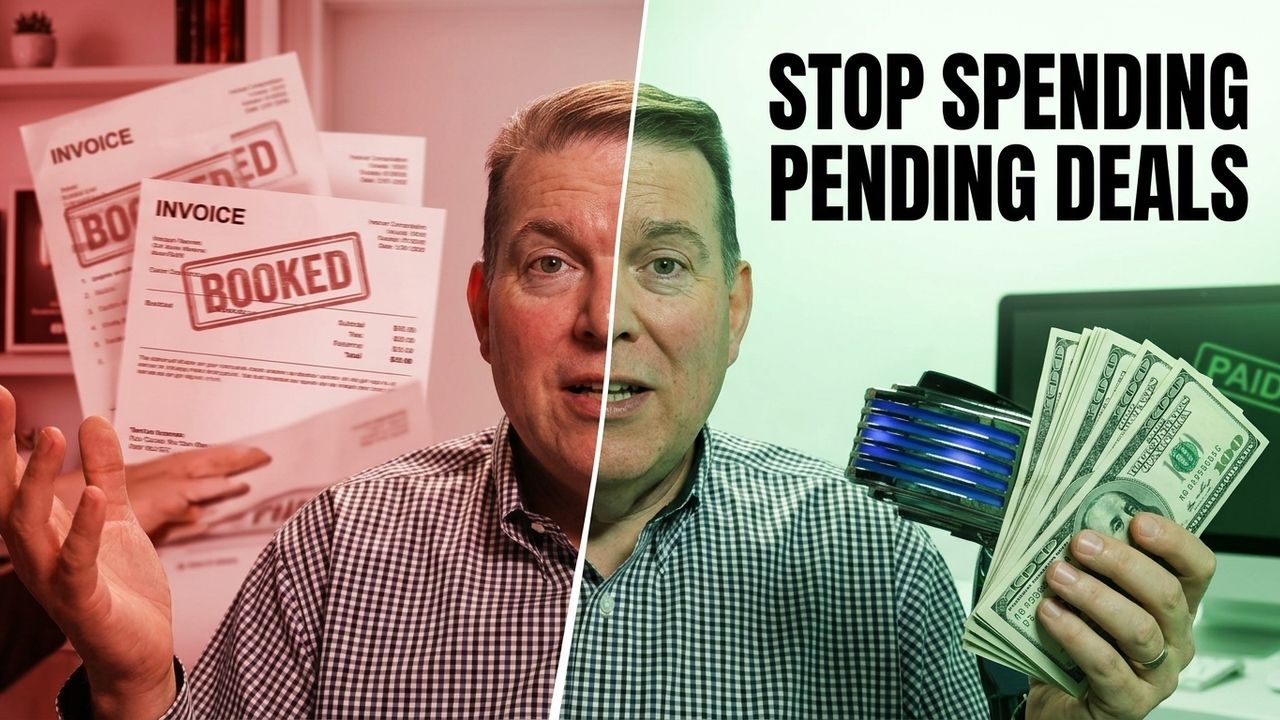
Here's the mistake almost every creator makes: counting a signed contract as revenue.
You see the email. The contract is signed. The brand confirmed the amount. You think, "Okay, I have $10,000 coming in." But you don't. Not yet.
What you actually have is a promise.
The timeline for sponsor payments is rarely what you expect:
● Booked: Deal is signed, campaign agreed upon
● Delivered: Content goes live
● Invoiced: You send the bill
● Paid: Money hits your bank account
These are four different moments. Most creators skip straight from "booked" to spending as if they're "paid." That's where it breaks.
I worked with a podcaster last year who signed a $15,000 deal in January. He immediately upgraded his studio equipment ($3,000), hired a part-time editor ($2,000/month), and bumped up his sponsorship packages. The campaign launched in February. The brand didn't pay until April. By March, he was sweating.
The math looked good on paper. In reality, he was bleeding cash while waiting for a check that had been promised but not yet received.
What Actually Goes Wrong
Late payments are the rule, not the exception.
Most brand deals don't specify a payment date. Even if they do, "Net 30" often means 45 or 60 days in practice. Some brands are slower. Some have quarterly approval cycles. Some wait until they see engagement metrics before releasing the final payment.
One creator I know had a major brand delay payment by four months while their CFO was on sabbatical. The contract was solid. The invoice was sent. The money still wasn't there.
Deals die unexpectedly.
You shake hands on a partnership. Weeks in, the brand's marketing director leaves. Budget gets redirected. A competing creator signed with them first, and they only had room for one. The campaign gets postponed "indefinitely."
I had a coaching client lose $8,000 when her brand partner underwent a merger and froze all vendor payments for 3 months.
Premature spending is the killer.
Confidence in a deal makes you spend. You pre-order equipment that "ships in 30 days," figuring the payment will cover it. You will hire a contractor starting next month. You commit to ad spend. You upgrade your streaming setup.
None of it is wrong in isolation. But when the check arrives late or doesn't arrive at all, you've already spent money you don't have.
Revenue illusions destroy planning.
When you count pending deals as actual revenue, your financial picture is fake. You think you're at $40K monthly income when you're actually at $8K. The $32K is still in someone else's bank account, awaiting approval or a processing delay.
That fake number changes how you make decisions. It's why you end up overcommitted.
Build a Simple System
The antidote isn't complicated. It's a cash flow management system specifically for sponsor income.
Separate booked, billed, and paid.
Create three tracking buckets:
● Booked: Deal is signed, amount confirmed, contract exists
● Billed: Content delivered, invoice sent, amount owed
● Paid: Money in the bank account
Only count "paid" when you're making spending decisions. Booked and billed are good leading indicators, but they're not spendable.
One creator I work with uses a simple Google Sheet: columns for brand name, signed date, content delivery date, invoice date, payment date, and amount. At the end of each week, she can see what's actually paid vs. what's still in progress.
Don't spend money you don't have.
This one is harder in practice than in theory, but it's non-negotiable. If a sponsor payment hasn't cleared your bank account, it doesn't count for budgeting purposes.
If you need to upgrade equipment or hire help, use money that's already in the account. Wait for the deal to land, or fund the expense from your baseline revenue (YouTube, Patreon, whatever's consistent).
I know this sounds obvious. I also know most creators skip this step because the payment feels certain. It rarely is.
Build a sponsor buffer.
Set aside a cash reserve specifically for gaps between when deals land and when payments arrive.
If your average sponsor payment cycle is 60 days, and your operating expenses are $5,000/month, aim to keep $5,000-$10,000 in a separate sponsor buffer account. It acts like an internal loan when payments are delayed.
Once a sponsored payment lands, you replenish the buffer. This lets you weather payment delays without scrambling.
One creator I coached called it her "sponsor safety net," and it gave her enough breathing room to stop panicking every time a brand was "processing" the payment.
Smooth the peaks and valleys.
Sponsor deals are lumpy. You might get nothing for two months, then land three deals, each paying $5,000, in the same week.
Instead of spending $15,000 all at once, treat it as part of your regular monthly operating revenue. Take what you need to operate and keep the rest in reserve. The reserve is what covers you during dry months.
Track payment timelines.
Write down when contracts are signed, when content goes live, when invoices are sent, and when payments clear.
After a few months, you'll see patterns. Brand X always pays in 45 days. Brand Y took 90 days last time. Sponsor Z paid on time. These patterns let you forecast more accurately and stop getting blindsided.
The Real Test: Cash Over Contracts
Revenue isn't revenue until it's in your bank account.
I know that sounds like financial-advisor speak, but it's the difference between thriving and panicking. A $20,000 contract that pays in four installments across 180 days is very different from $20,000 that lands in 30 days.
The contract is a promise. The cash is real.
Make decisions based on cash. Not contracts. Not signed emails. Not the sponsor's best intentions.
If you're struggling with delayed sponsor payments or you're not sure whether you should spend money on growth, that's exactly what I help creators with. Head over to contentcreatorsaccountant.com/helpme and let's talk about building a sponsor cash flow system that actually works for your business.
The goal isn't just to survive sponsor payment delays. It's to move past them entirely. Once you have a system, you stop living paycheck to paycheck. You stop sweating every time an invoice sits in "processing." You stop making spending decisions based on hope.
That's when your creator business stops feeling fragile and starts feeling like an actual business.

President
Ralph V. Estep, Jr. is a Delaware-based licensed accountant, author, rancher, and media host with more than 30 years of experience in finance, taxation, and small-business leadership. As the founder of Saggio Accounting+PLUS and the creator of the Ask Ralph Media network, Ralph helps entrepreneurs, creators, and everyday families replace money confusion with clarity, confidence, and practical next steps—without shame and without hype.
Ralph’s work blends deep professional expertise with a coach’s mindset and a communicator’s heart. He has held leadership roles across public accounting, financial institutions, law firms, and technology organizations, bringing a rare combination of traditional accounting rigor and modern systems thinking to the people he serves. A graduate of the University of Delaware and Wilmington University (MBA), Ralph is known for turning complex money topics into simple, repeatable frameworks that help people make wiser decisions and build lasting financial stability.
Through Ask Ralph Media, Ralph hosts multiple shows designed to meet people where they are and guide them forward. He is the host of Financially Confident Christian, a daily, faith-based show offering warm, pastoral encouragement for listeners who want peace and practical wisdom with their finances.
He also hosts Truth Unveiled with Ralph, a weekly program that contrasts cultural pressure with biblical truth and invites listeners into deeper spiritual and practical alignment. For small business owners, Ralph leads Grit and Growth Business, spotlighting real sto… Read More
Business Profit vs. Cash Flow: Why You're Profitable but Have No Money in the Bank