Why Good Months Still Feel Scary: The Real Reason Creators Quit
Why Good Months Still Feel Scary: The Real Reason Creators Quit
You had a $9,000 month. On paper, that's a win. So why does it feel like dread instead of relief?
If that question hits home, you're not alone, and you're not broken. Nearly a quarter of creators who quit don't leave because they ran out of talent or ran out of audience. They leave because they never trusted the money. A good month still felt shaky, because they couldn't say with confidence what was actually theirs to spend.
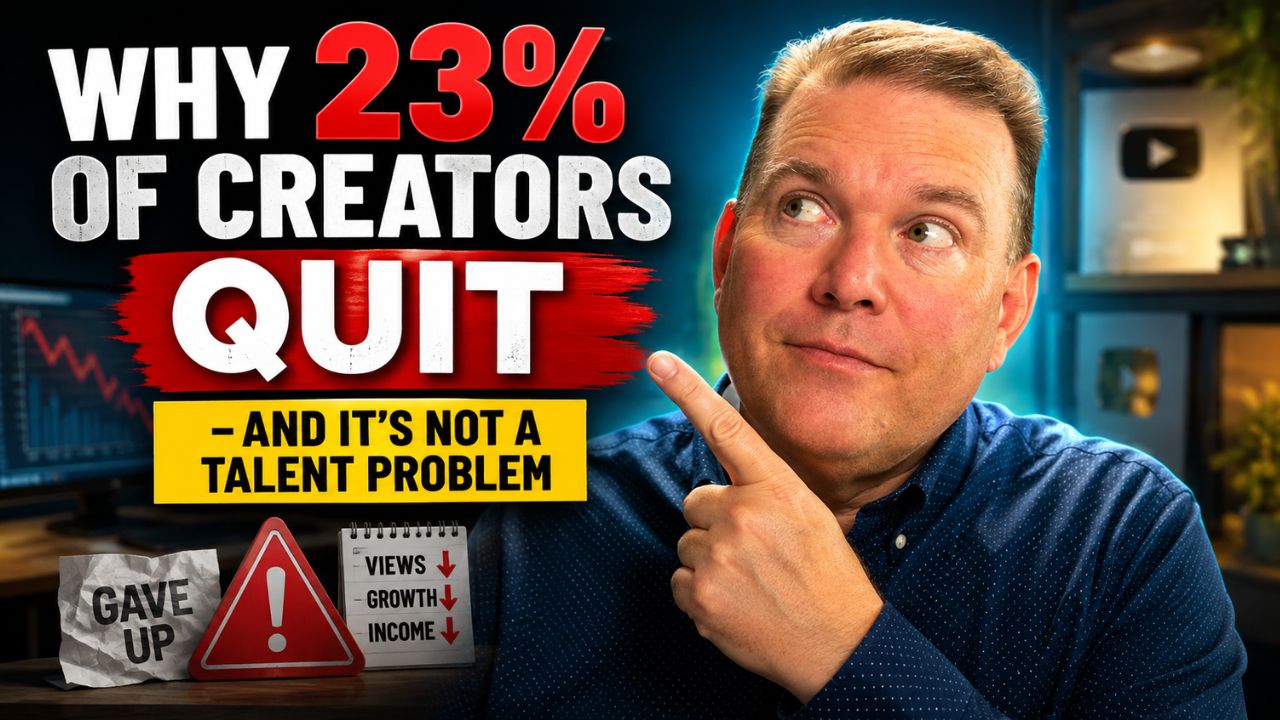
I'm Ralph Estep Jr., a licensed accountant of 30 years, a creator myself, and known as The Content Creators Accountant. I live with the same payout chaos you do. Stripe, PayPal, AdSense, brand deals, all landing on different schedules with different fee structures. Here's what I've learned watching creators walk away, and what actually fixes it.
It's a Certainty Problem, Not an Income Problem
Creators rarely quit from lack of income. They quit from lack of certainty. A W2 job comes with a predictable paycheck. Creator income doesn't work that way, and most money systems were never built for it. Five platforms, five schedules, five fee structures, one bank account trying to make sense of all of it. That's not a discipline problem. It's a systems problem.
Where It Actually Breaks Down
Three places, and they compound on each other.
Visibility is the first. Money lands and you don't know what's really yours. A $4,200 payout comes in, but $1,100 of it is sales tax you collected, $600 is sitting in an open refund window, and $300 is a platform fee that hasn't posted yet. Your real number is closer to $2,200. Your bank app still says $4,200.
Separation is the second. Business and personal money keep touching. A business card covers a personal grocery run "just this once," and three months later both your bookkeeping and your personal budget are foggy.
Planning is the third. Without a system, everything becomes reactive. A tax bill that should have been set aside monthly shows up in April as an emergency instead of a line item you already expected.
Two Real Examples
Say you earn $6,500 in a month. Solid, right? But if you don't know what's already spoken for, taxes, subscriptions, upcoming renewals, you hesitate. You delay hiring help. You delay upgrading gear. Do that for a year and the hesitation quietly turns into burnout.
Or say you pull in $11,000 in Q4 from brand deals. It feels like a windfall. But Q1 is historically your slowest quarter, maybe $2,000 if you're lucky. Without a plan for that gap, the $11,000 gets spent like it's the new normal, and Q1 hits you sideways. The income was never the problem. The absence of a plan for the gap was.
Why Even Good Months Feel Bad
This comes down to exposure, the gap between what your bank balance shows and what you actually know you can spend. The wider that gap, the more anxious every purchase feels. A $40 software subscription can feel like a $4,000 decision when you don't trust your real number. That constant tension is what pushes creators out the door, not a bad month, a good one that still doesn't feel safe.
Signs It's Time to Get Help
You're afraid to check your balance before checking your calendar. You've avoided opening a payout dashboard for way too long. A sale comes in and your first feeling is dread instead of relief. None of that means you're bad at this. It means the system underneath your income is missing.
A Quick Test for Any Advice You Get
Internet advice loves to say "just hustle harder." A better question is whether you actually understand what's happening financially. If a piece of advice doesn't get you to a clear answer, walk away from it, or you can't say how much you can safely spend this week in under 10 seconds, it didn't solve anything.
You're Not Alone in Thinking This
Jay Clouse at Creator Science built a whole education company around treating creator work as a real business with systems. Adam Schaeuble at Podcasting Business School makes the same point weekly: an audience without a business structure is a hobby, not income. Research from The Tilt found the creators who last are the ones running their work like a business, and industry burnout research from 2025 puts over half of creators in burnout, with roughly a third considering leaving, financial pressure sitting underneath most of it.
Today's Win
Pick one payout from this month and figure out what's actually left after taxes, refunds, and fees. That single number is more useful than anything a hustle-harder post will tell you.
If you want help making your money feel steady again, go to contentcreatorsaccountant.com/helpme. No pressure, just a clear next step.

President
Ralph V. Estep, Jr. is a Delaware-based licensed accountant, author, rancher, and media host with more than 30 years of experience in finance, taxation, and small-business leadership. As the founder of Saggio Accounting+PLUS and the creator of the Ask Ralph Media network, Ralph helps entrepreneurs, creators, and everyday families replace money confusion with clarity, confidence, and practical next steps—without shame and without hype.
Ralph’s work blends deep professional expertise with a coach’s mindset and a communicator’s heart. He has held leadership roles across public accounting, financial institutions, law firms, and technology organizations, bringing a rare combination of traditional accounting rigor and modern systems thinking to the people he serves. A graduate of the University of Delaware and Wilmington University (MBA), Ralph is known for turning complex money topics into simple, repeatable frameworks that help people make wiser decisions and build lasting financial stability.
Through Ask Ralph Media, Ralph hosts multiple shows designed to meet people where they are and guide them forward. He is the host of Financially Confident Christian, a daily, faith-based show offering warm, pastoral encouragement for listeners who want peace and practical wisdom with their finances.
He also hosts Truth Unveiled with Ralph, a weekly program that contrasts cultural pressure with biblical truth and invites listeners into deeper spiritual and practical alignment. For small business owners, Ralph leads Grit and Growth Business, spotlighting real sto… Read More
Stop Asking People to "Donate" to Your Show