Why 30,000 Followers Still Isn't a Business
Why 30,000 Followers Still Isn't a Business
A creator wrote to me with numbers that looked great on paper. Thirty thousand YouTube subscribers. Steady uploads. Growth trending up every month. Then I asked about revenue, and the answer was almost nothing.
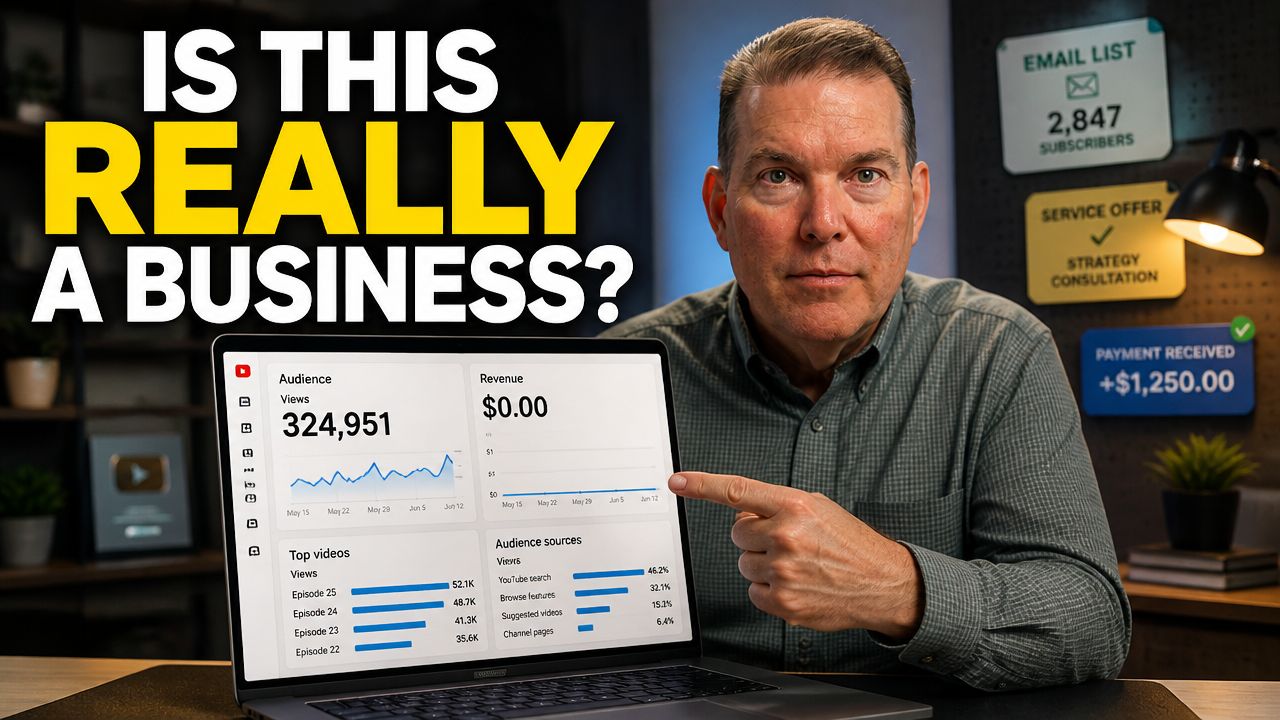
That gap is more common than you would think. I have looked at the books behind plenty of brands with big audiences and small deposits, and the pattern is always the same. Somebody built a following and assumed the following was the business. It isn't. It's a doorway.
Here's how to tell the difference, and what to do about it.
You're Building on Rented Land
Most creators run their income through platforms they don't own. Algorithms they don't control. Audiences they can only reach when the platform lets them.
The risks are real. An algorithm shift overnight. A hacked or suspended account. A platform that fades out entirely (ask anyone who built on Vine). A policy change nobody voted on. And the money that comes through those platforms, ad revenue, creator funds, sponsor deals, is paid by someone who can stop paying whenever they decide to.
That's not a business. That's a distribution channel. If it disappears, so does your income.
Own the Connection, Not Just the Reach
The fix starts with a simple test: can you reach your audience Tuesday at 9am without asking anyone's permission? An email list or a customer list you control passes that test. A follower count doesn't.
Followers live on the platform. Customers live in your business. If the algorithm decides who sees your message, you don't have access, you have permission. Start building one place you own to reach people directly.
The Four Levels Every Creator Needs
Picture a pyramid built downward: Content, Audience, Offer, Revenue. Most creators live in the top two layers and never pour the bottom ones.
Content creates attention. It's where everyone starts, and it builds trust, but it's the entry point, not the destination. More content will not fix a revenue problem.
Audience is where most creators stop. Ten thousand followers feels like success even when the bank account doesn't move. A follower is a spectator, not a customer, and blaming yourself for slow growth here is usually the wrong diagnosis.
Offer is where the shift happens. Your offer is how you solve a problem, whether that's coaching, consulting, done-for-you services, digital products, or a membership. It is not a tip jar or a vague link in your bio. A real offer names a problem, names a result, and names a price.
Revenue is the foundation: predictable income you can plan around, forecast, and pay yourself from. That's the difference between a paycheck and a maybe.
The Audit That Exposes the Gap
Take that 30,000-subscriber channel from earlier. Content: strong. Audience: growing. Offer: weak or unclear. Revenue: inconsistent. Verdict: a channel, not a business.
The fix isn't more followers. One percent of 30,000 is 300 people, and you don't need anywhere near that many. A small handful of clients at a real professional fee changes the entire income picture. Same content, different structure.
Most creators skip straight from content to sponsorships, and sponsorships are rented too. One email from a brand and that income is gone. Sponsorship pays you for the audience. An offer pays you for the outcome.
"I Don't Want to Be Salesy"
I hear this every week, and I take it seriously. Here's the reframe: an offer isn't a pitch, it's a door. You already give away the what and the why in your content. The offer is just the help doing it with someone directly. If you solve a real problem and stay quiet about how you could help, the people who needed you go find help somewhere worse. Charging isn't taking. It's what makes the help sustainable.
The Correct Path
The full model is Content, Audience, Problem, Offer, Revenue. Problem is the missing link most people skip, and it's what connects an audience to an offer. Without it, the offer is a guess. With it, the offer is obvious.
Think of it as multiplication, not addition: Audience times Problem times Offer equals Value. A zero anywhere and the whole thing zeroes out.
Today's Win
Answer three questions out loud this week. If your main platform vanished, who could you still reach? What problem do you solve, in one sentence? What can someone buy from you today? A blank answer on any of those isn't a content problem. It's a gap in your model.
If you're realizing you've built a channel and not a business, that's not a failure, it's a diagnosis. Apply for a Content Monetization Audit at contentcreatorsaccountant.com/audit and let's build your offer, your system, and predictable revenue

President
Ralph V. Estep, Jr. is a Delaware-based licensed accountant, author, rancher, and media host with more than 30 years of experience in finance, taxation, and small-business leadership. As the founder of Saggio Accounting+PLUS and the creator of the Ask Ralph Media network, Ralph helps entrepreneurs, creators, and everyday families replace money confusion with clarity, confidence, and practical next steps—without shame and without hype.
Ralph’s work blends deep professional expertise with a coach’s mindset and a communicator’s heart. He has held leadership roles across public accounting, financial institutions, law firms, and technology organizations, bringing a rare combination of traditional accounting rigor and modern systems thinking to the people he serves. A graduate of the University of Delaware and Wilmington University (MBA), Ralph is known for turning complex money topics into simple, repeatable frameworks that help people make wiser decisions and build lasting financial stability.
Through Ask Ralph Media, Ralph hosts multiple shows designed to meet people where they are and guide them forward. He is the host of Financially Confident Christian, a daily, faith-based show offering warm, pastoral encouragement for listeners who want peace and practical wisdom with their finances.
He also hosts Truth Unveiled with Ralph, a weekly program that contrasts cultural pressure with biblical truth and invites listeners into deeper spiritual and practical alignment. For small business owners, Ralph leads Grit and Growth Business, spotlighting real sto… Read More
How Much Does a Podcast Actually Pay? The Real Numbers Behind Ad Revenue