
Business Profit vs. Cash Flow: Why You're Profitable but Have No Money in the Bank
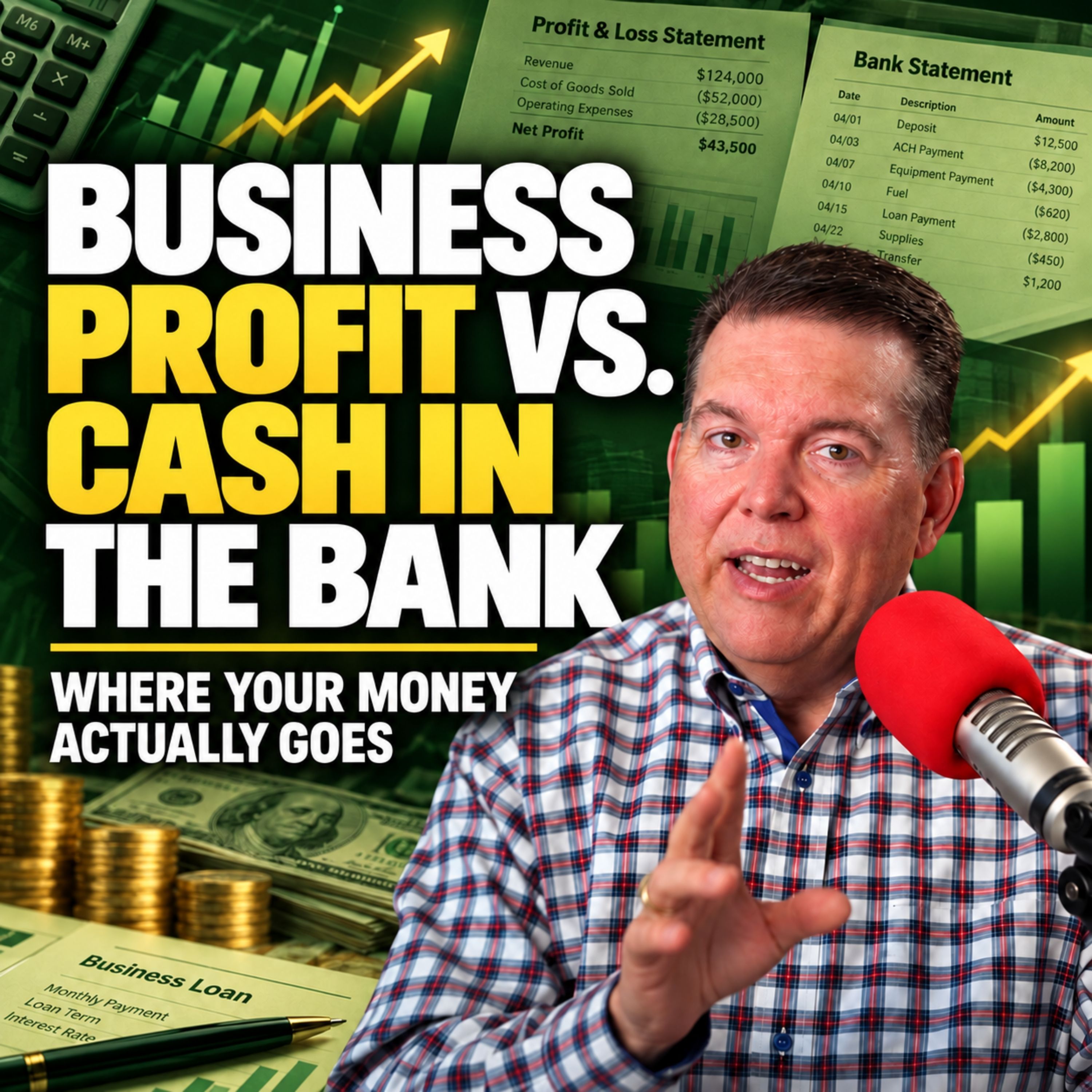
Your business made $140,000 in profit last year. So why is there only $800 in your bank account?
I've heard this question countless times in my 30 years as an accountant.
Here's what most small business owners don't realize: Business profit and cash flow are two very different numbers.
And the difference can leave you scrambling to pay your taxes.
Why Doesn't Your Business Profit Match Your Bank Balance?
Your profit and loss statement (P&L) shows how much your business earned after expenses.
Your bank account shows how much cash you have left.
Let's look at a small business generating $900,000 in annual revenue with $140,000 in net profit.
Here's where that $140,000 can go.
1. Owner Draws: $96,000
You pay yourself $8,000 a month to cover your mortgage, groceries, and everyday expenses.
For a sole proprietor or an LLC taxed as a sole proprietorship, those owner draws aren't deductible business expenses.
Your profit stays at $140,000, even though you've taken $96,000 out of the bank.
Cash remaining: $44,000
2. Business Taxes: $28,700
Here's where things get painful.
You generally pay income tax and self-employment tax based on taxable business earnings, regardless of how much cash you've withdrawn.
For this example, assume approximately $28,700 in federal taxes. Your actual bill depends on deductions, filing status, and other income.
Cash remaining: $15,300
3. Business Loan Payments: $14,500
Remember that truck you financed?
If you deducted its purchase price through accelerated depreciation, you generally can't deduct the loan principal payments again.
But the bank still expects its money every month.
Annual loan principal payments: $14,500
Cash remaining: $800
Where Did Your $140,000 Business Profit Go?
| Cash flow breakdown | Amount |
|---|---|
| Net business profit | $140,000 |
| Owner draws | -$96,000 |
| Estimated federal taxes | -$28,700 |
| Loan principal payments | -$14,500 |
| Cash remaining | $800 |
That's how a profitable small business can end up with almost nothing in the bank.
This is a simplified example. Your actual cash flow also depends on receivables, payables, asset purchases, and other transactions.
How to Improve Cash Flow in Your Small Business
Start by looking beyond your P&L statement.
Review four numbers:
-
Net profit: What your business earned.
-
Owner draws: What you took home.
-
Taxes: What you paid or need to reserve.
-
Loan principal: What you paid toward business debt.
Then compare those numbers with your bank statements.
If they don't explain your cash balance, it's time to dig deeper.
Because showing a profit on paper doesn't mean you have cash available to spend.
Need Help Understanding Where Your Business Money Goes?
I'm Ralph, and I've spent 30 years helping business owners make sense of their numbers.
For $199, I'll review your profit and loss statement and bank statements with you in a one-on-one Google Meet session.
You'll walk away with a written plan to better understand your business finances and prepare for what's ahead.
Book Your $199 Business Review
Your business is making money. Let's find out where it's going.

President
Ralph V. Estep, Jr. is a Delaware-based licensed accountant, author, rancher, and media host with more than 30 years of experience in finance, taxation, and small-business leadership. As the founder of Saggio Accounting+PLUS and the creator of the Ask Ralph Media network, Ralph helps entrepreneurs, creators, and everyday families replace money confusion with clarity, confidence, and practical next steps—without shame and without hype.
Ralph’s work blends deep professional expertise with a coach’s mindset and a communicator’s heart. He has held leadership roles across public accounting, financial institutions, law firms, and technology organizations, bringing a rare combination of traditional accounting rigor and modern systems thinking to the people he serves. A graduate of the University of Delaware and Wilmington University (MBA), Ralph is known for turning complex money topics into simple, repeatable frameworks that help people make wiser decisions and build lasting financial stability.
Through Ask Ralph Media, Ralph hosts multiple shows designed to meet people where they are and guide them forward. He is the host of Financially Confident Christian, a daily, faith-based show offering warm, pastoral encouragement for listeners who want peace and practical wisdom with their finances.
He also hosts Truth Unveiled with Ralph, a weekly program that contrasts cultural pressure with biblical truth and invites listeners into deeper spiritual and practical alignment. For small business owners, Ralph leads Grit and Growth Business, spotlighting real sto… Read More

Why Your Audience Won't Pay You (Even If They Love Your Content)