Why Nobody Pays for Your Content
Key Takeaways
- Giving away content for free can trap creators in a cycle where audiences expect everything at no cost, making it difficult to monetize expertise later.
- Producing 46 episodes cost 138 hours of time and $19,250 in direct production expenses, proving that free content creation carries a massive hidden financial toll.
- Relying solely on ad revenue under the two-cent rule—such as earning about $5 a month from 250 downloads—is unsustainable for most digital creators.
- Failing to monetize your creative efforts can trigger IRS Section 183 hobby loss rules, meaning you lose money while potentially missing out on legitimate business deductions.
- The best way to break the free content trap is to put a concrete price on one thing you know and state it directly to someone who can pay.
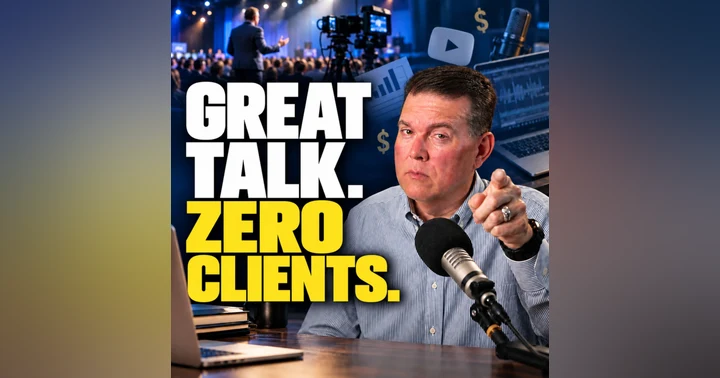
I was a title sponsor of a podcasting event. I gave the primetime speech to a room full of content creators, my exact audience, and I walked out with zero clients. I have over 200,000 subscribers on YouTube and 30 years of experience as a licensed accountant, and that room still didn't pay. In this episode, I share my real numbers and tell you why I think free is the reason nobody is paying you.
Learn more at contentcreatorsaccountant.com
In this episode:
- What 46 episodes cost me: 138 hours of my time plus $19,250 in production, close to $47,000 at my billing rate
- Why a $10,000 sponsorship and a primetime speech got me zero clients
- Why free works as a price tag, and why you can't charge for expertise you refuse to buy yourself
- The two-cent rule: 250 downloads an episode earns me about $5 a month from ads
- The hobby trap under Section 183, where you lose money giving expertise away and still owe the IRS
This week's action step: put a price on one thing you know and say it to one person who can actually pay you.
Mentioned in this episode:
Kevin Kelly's 1,000 true fans article (2008)
Adam Schwebel, Podcasting Business School
Jay Clouse, Creator Science
IRS Section 183 (hobby loss rules)
BudSprout's published podcast download numbers
Ready to build your first paid offer? Book the Content Monetization Audit, a one-on-one call with me, at contentcreatorsaccountant.com/makemoney
The tax numbers in this episode are general information, not advice for your specific situation.
Have a question for me? Send it in, and follow the show so you don't miss next week's episode.
Frequently Asked Questions
Why won't my audience pay for my content?
When you establish a pattern of giving away all your expertise for free, your audience comes to expect it as the baseline price, making it extremely difficult to introduce paid offers later.
How much does podcasting or content creation really cost?
Content creation requires significant investments of both time and money; for example, producing 46 episodes can cost hundreds of hours and tens of thousands of dollars in production expenses.
What is the two-cent rule in podcasting?
The two-cent rule refers to the minimal ad revenue generated from podcast downloads, where an episode with 250 downloads might only earn about $5 a month.
What is the IRS hobby trap for content creators?
Under IRS Section 183, if you consistently lose money giving your expertise away without a clear profit motive, the IRS may classify your business as a hobby, impacting your ability to write off business expenses.